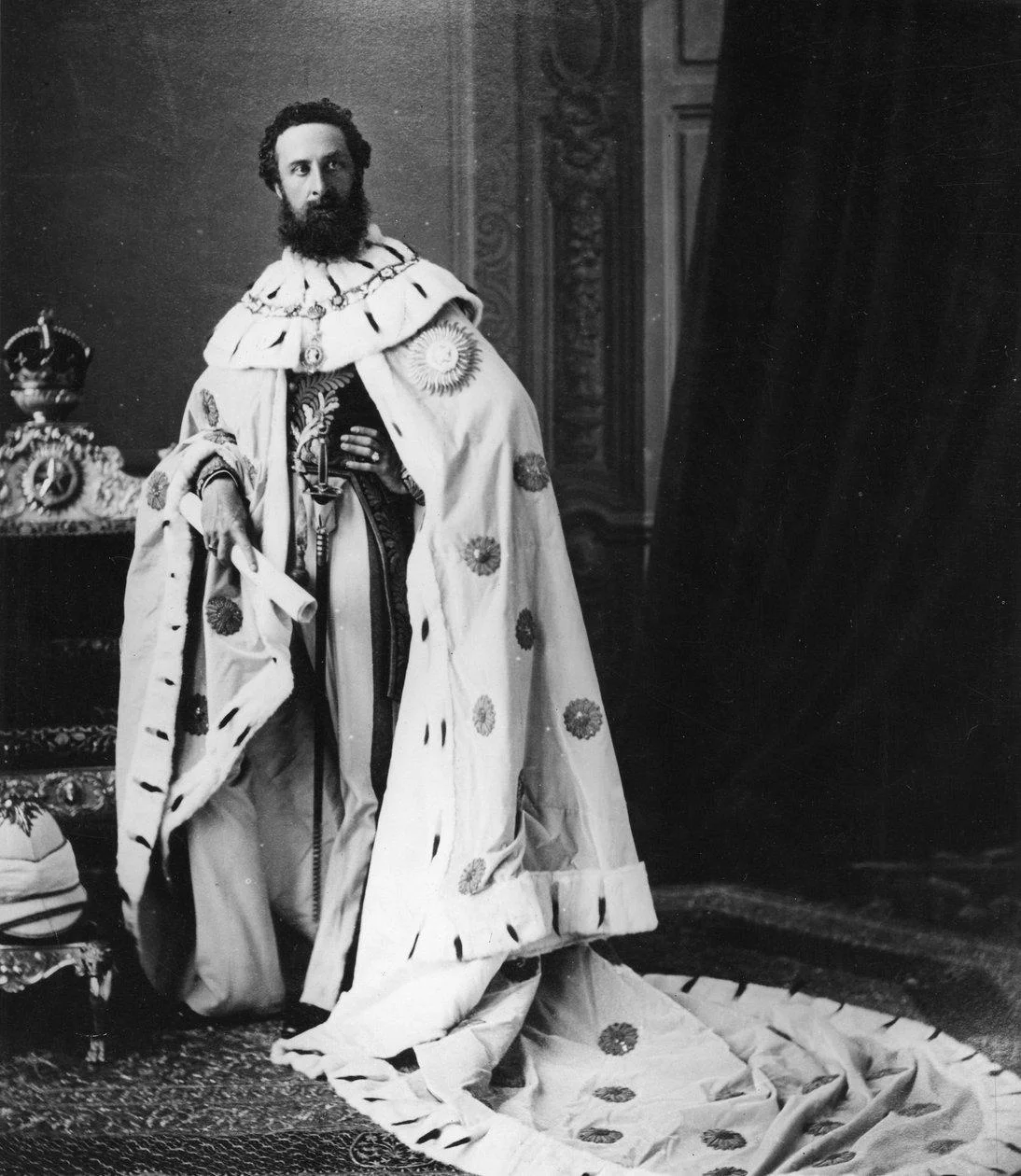
This portrait captures Lord Robert Bulwer-Lytton, the 1st Earl of Lytton, during his tenure as Viceroy and Governor-General of India (1876–1880). Dressed in the elaborate ceremonial robes of the Grand Master of the Order of the Star of India, the image projects the height of British imperial authority.
However, Lytton’s legacy remains deeply controversial due to his role in the Great Famine of 1876–1878. As the famine devastated the Indian subcontinent, resulting in an estimated 5.5 to 8 million deaths, Lytton adhered strictly to laissez-faire economic policies.
Influenced by the social Darwinist views of the time, his administration prioritized the export of grain to Great Britain and limited humanitarian relief, famously stating that the state should not interfere with the natural course of trade. The famine, compounded by the disastrous Second Anglo-Afghan War which Lytton also orchestrated, solidified his reputation as one of the most polarizing figures in British colonial history.
The photograph serves as a stark visual representation of the disconnect between imperial grandeur and the humanitarian catastrophes occurring under colonial rule. Historians often cite Lytton’s tenure as a turning point in the critique of British governance in India, illustrating the human cost of colonial administrative policies during the late 19th century.