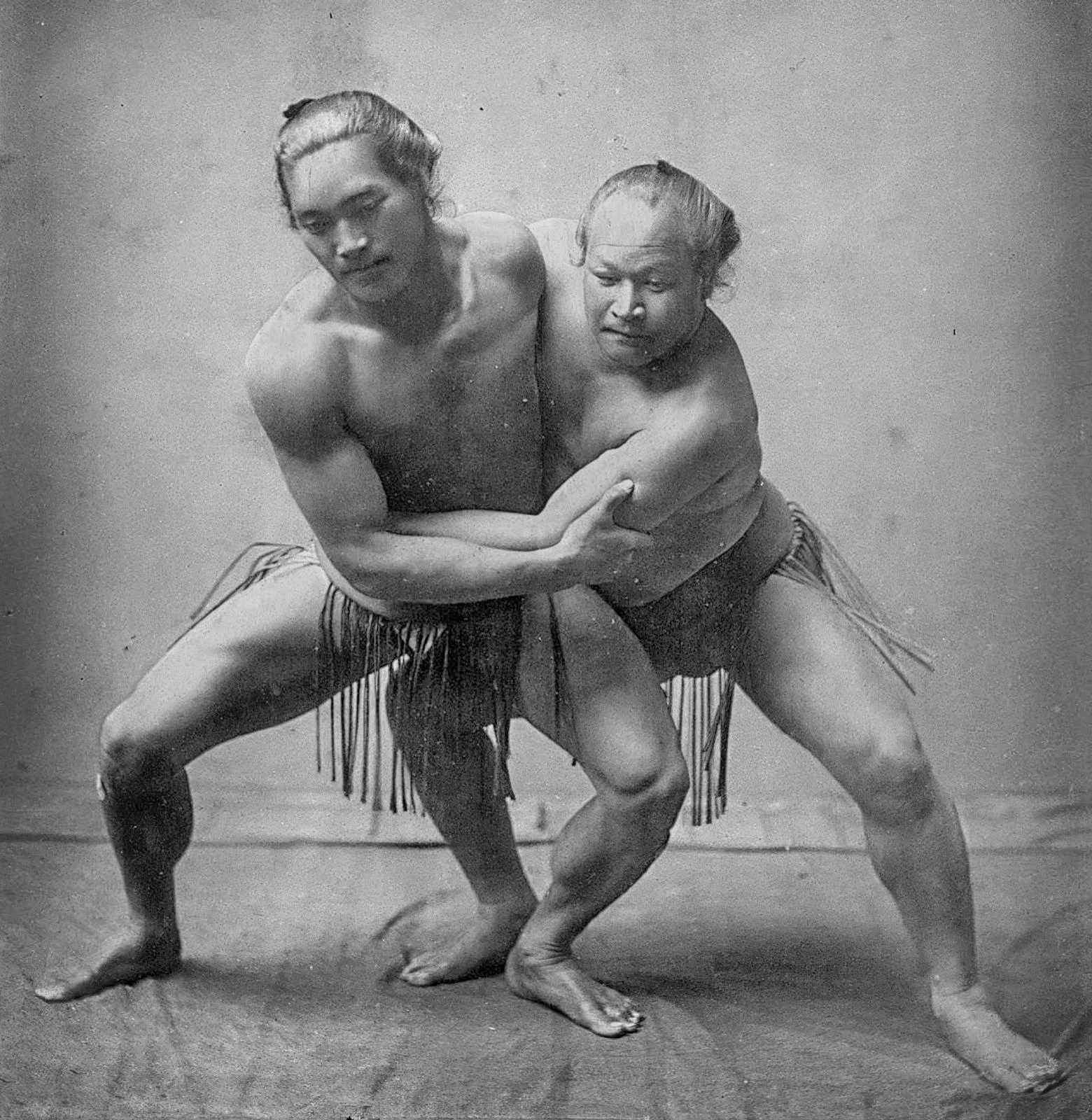
This striking portrait, captured in 1865 by the pioneering travel photographer Felice Beato, provides a rare, authentic glimpse into the waning years of Japan’s Edo period. The subject is a samurai, the elite warrior class that defined Japanese society for centuries.
He is depicted in traditional attire, holding a katana—the iconic curved blade that served as the 'soul of the samurai'—and a folding fan, symbolizing both martial prowess and cultural refinement. At the time this photograph was taken, the Tokugawa Shogunate was in its final death throes, facing mounting internal pressure and external influence from Western powers.
Beato, an Italian-British photographer, was one of the first to document the people and landscapes of Japan, often employing hand-coloring techniques to bring his subjects to life. His work is historically significant as it preserves the visual identity of a warrior caste that would be officially abolished just a few years later during the Meiji Restoration (1868).
This image is not merely a portrait; it is a historical document of the 'Bakumatsu' period—a time of intense social, political, and cultural transition. The samurai’s stoic expression reflects the discipline of Bushido, the warrior code, even as the world around him shifted toward modernization and industrialization.
Scholars often cite Beato’s studio photography as the primary bridge between traditional Japanese aesthetics and the emerging medium of Western photography. By capturing these individuals, Beato ensured that the legacy of the samurai remained documented for posterity, providing a visual counterpoint to the rapid westernization that followed the Meiji transition.
This image serves as a poignant reminder of the final days of a feudal order that shaped the nation’s history for over 700 years.