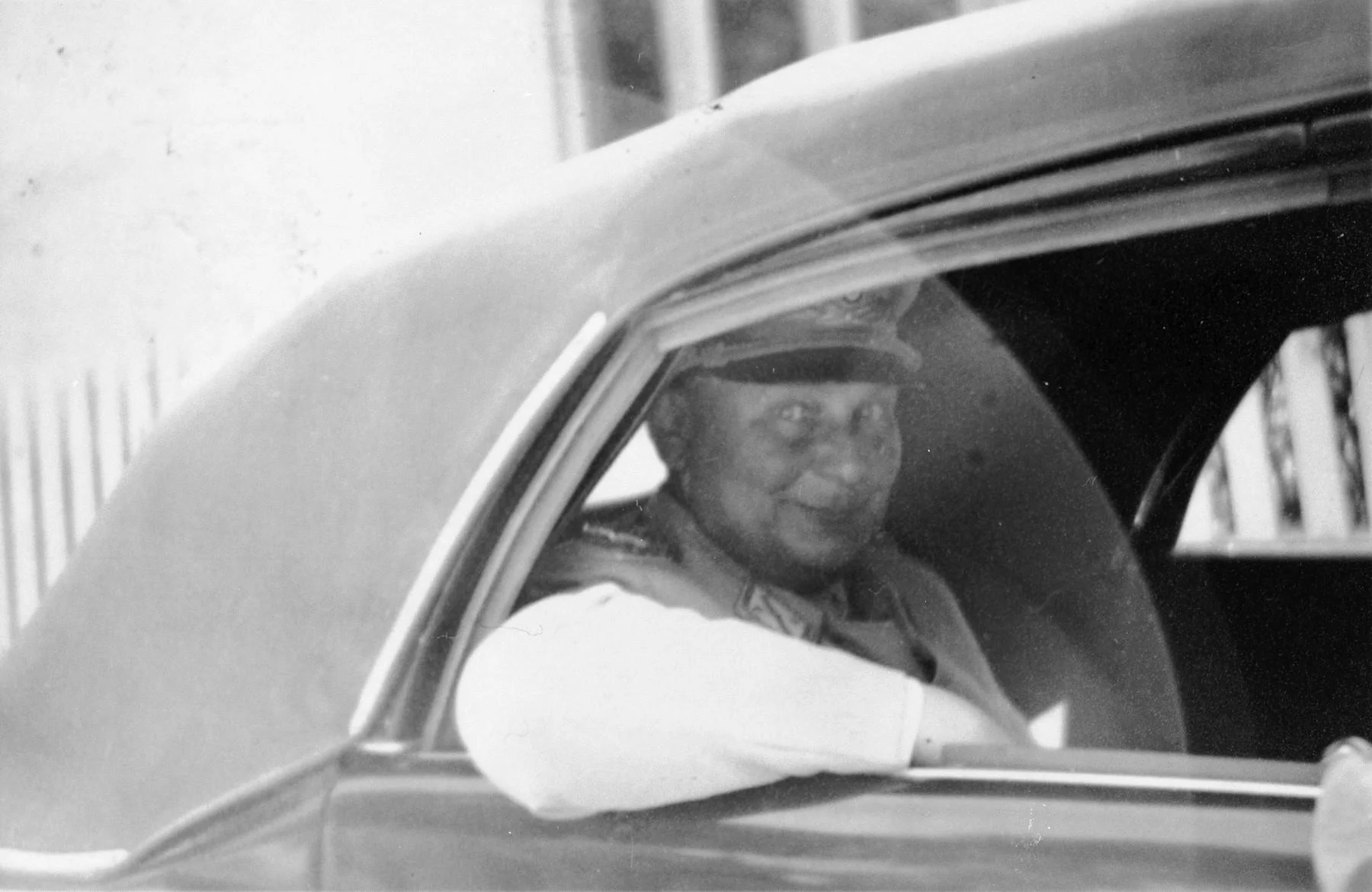
This photograph captures Hermann Göring, the Reichsmarschall of Nazi Germany and commander of the Luftwaffe, shortly after his surrender to the United States 36th Infantry Division on May 9, 1945, near Fischhorn Castle in Austria. Göring, once Adolf Hitler’s designated successor, is seen here in a moment of relative ease, a stark contrast to his later fate at the Nuremberg Trials.
Upon his initial capture, the treatment of Göring by American forces sparked significant controversy. Reports emerged of U.S. officers allowing the high-ranking Nazi official to dine with them, socialize, and even grant interviews to the press.
This lenient approach was viewed by many, including Allied leadership, as an unacceptable lapse in protocol for a man responsible for the terror of the Blitz and the administration of the Holocaust. Historians note that this period of 'soft' captivity allowed Göring to attempt to manipulate his public image before he was eventually transferred to the custody of the International Military Tribunal.
His dependence on dihydrocodeine—a derivative of morphine—was also managed by his captors during this time, as he underwent withdrawal. The image serves as a chilling reminder of the chaotic transition period between the collapse of the Third Reich and the establishment of formal war crimes proceedings.
Ultimately, Göring was convicted of war crimes and crimes against humanity, and he committed suicide on October 15, 1946, just hours before his scheduled execution. This photograph remains a potent artifact of the immediate Post-War Era, illustrating the complex and often contentious interactions between the victors and the architects of the Nazi regime.