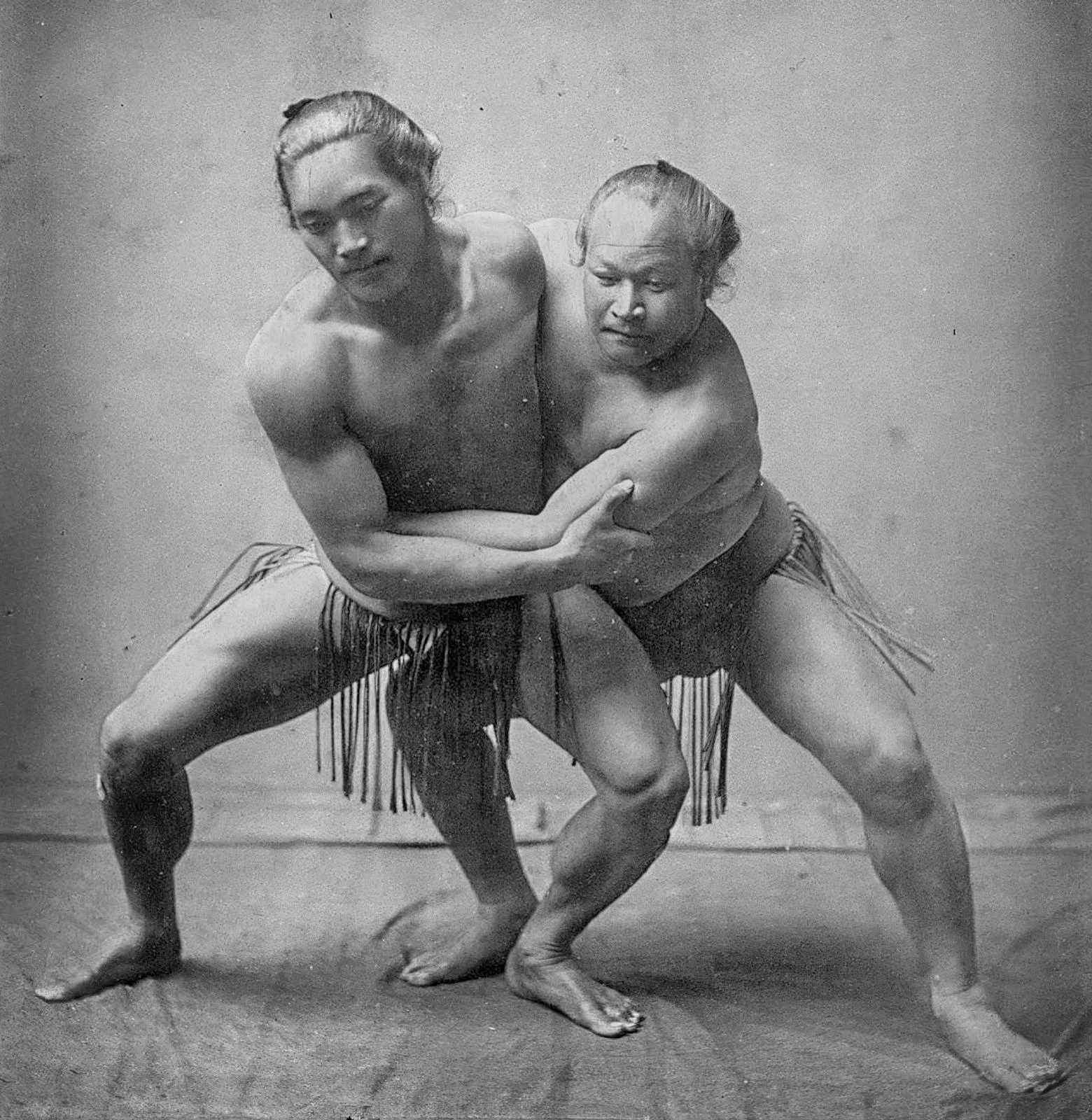
This striking photograph, captured around 1880 by the Austrian-born photographer Baron Raimund von Stillfried, provides a rare, posed glimpse into the world of traditional Japanese sumo wrestling during the Meiji era. The image features two wrestlers in a locked 'tachi-ai' stance, showcasing the physical intensity and specialized training of the sport.
At this time, Japan was undergoing rapid modernization, yet traditional practices like sumo remained essential cultural pillars. Stillfried, who established the 'Stillfried & Andersen' studio in Yokohama in 1875, was a pioneer in the 'Yokohama-shashin' school of photography, which specialized in hand-tinted portraits and staged scenes of Japanese life for foreign tourists and collectors.
By using a controlled studio environment rather than a live match, Stillfried was able to emphasize the musculature and technique of the wrestlers, creating a high-contrast aesthetic that appealed to Western perceptions of 'exotic' Japan. The wrestlers are depicted wearing traditional 'mawashi' loincloths, their hair styled in the distinct 'chonmage' topknot, which remains a symbol of professional sumo today.
Historically, the Meiji period (1868–1912) was a transformative time where Japan opened its borders to the West. This photograph serves as an early example of cultural documentation, bridging the gap between traditional Edo-period customs and the burgeoning interest of the global community.
The preservation of such images allows historians to analyze the physiological development of athletes in the 19th century and the commercialization of Japanese culture through early photography. This specific print is significant for its clarity and the intimate capture of a practice that has changed surprisingly little in its fundamental ritualistic form over the past 150 years.