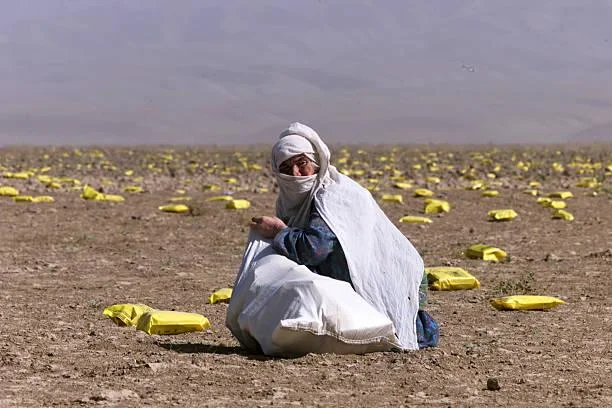
Captured on October 13, 2001, by photographer Patrick Robert, this poignant image depicts an Afghan woman gathering yellow, air-dropped food ration packets in a vast, arid landscape. This event occurred in the early stages of Operation Enduring Freedom, launched by the United States following the September 11 terrorist attacks.
In an effort to win 'hearts and minds' and alleviate a burgeoning humanitarian crisis, the U.S. military initiated a massive air-drop campaign, releasing tens of thousands of Humanitarian Daily Rations (HDRs) across Afghanistan. These packets were designed to provide a full day of sustenance, containing approximately 2,200 calories, and were specifically marked with the American flag to signal friendly intentions.
However, the strategy was highly controversial; critics argued that the yellow packets were visually indistinguishable from the yellow cluster bomblets also being dropped by U.S. aircraft, posing a lethal risk to civilians, particularly children. The image serves as a powerful historical document of the complexities of modern asymmetric warfare, where humanitarian aid and kinetic military operations intersected in a high-stakes geopolitical theater.
It highlights the vulnerability of the Afghan population caught between the Taliban regime and the incoming Western military intervention. The striking contrast between the bright, industrialized aid packages and the desolate, traditional landscape underscores the sudden and disruptive collision of global politics with local survival.
This photograph remains a seminal record of the early days of the War in Afghanistan, illustrating the paradox of 'humanitarian intervention' and the profound confusion experienced by civilians on the ground during the initial bombardment phase of the conflict.