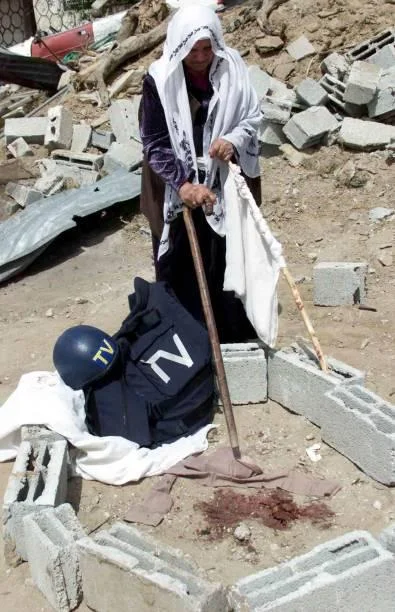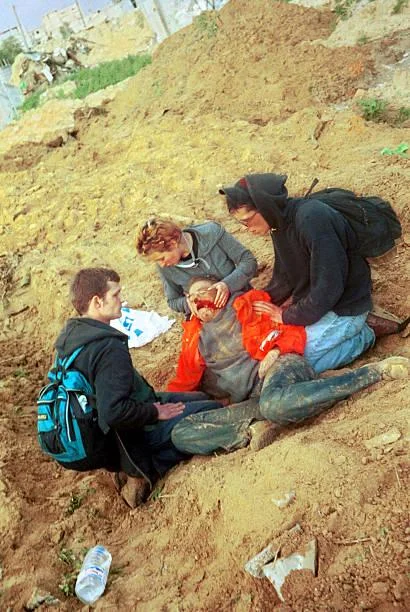
This harrowing photograph captures the immediate aftermath of the death of Rachel Corrie, a 23-year-old American peace activist and member of the International Solidarity Movement (ISM). On March 16, 2003, Corrie was killed in the Rafah refugee camp in the Gaza Strip while attempting to block an Israel Defense Forces (IDF) Caterpillar D9 armored bulldozer.
She was protesting the demolition of Palestinian homes, a tactic the IDF maintained was necessary to destroy tunnels used for arms smuggling. Witnesses stated that Corrie was wearing a high-visibility orange jacket and using a megaphone when the bulldozer operator ran over her, resulting in fatal injuries.
The incident sparked international outrage and became a defining moment in the discourse surrounding the Israeli-Palestinian conflict. The IDF conducted an internal investigation, ultimately concluding that the death was a tragic accident and that the operator could not see Corrie.
However, her family and human rights organizations, such as Amnesty International and Human Rights Watch, disputed the findings, calling for an independent inquiry into the use of force. The photograph has since become an iconic, if controversial, symbol of international activism in conflict zones.
It highlights the extreme dangers faced by non-combatants and foreign observers in the occupied territories during the Second Intifada. Corrie’s legacy continues to influence global debates on human rights, the ethics of non-violent resistance, and the accountability of military forces in civilian areas.
Her death remains a polarizing subject, serving as a focal point for those advocating for Palestinian rights and those defending Israeli security policies during a period of intense regional violence.