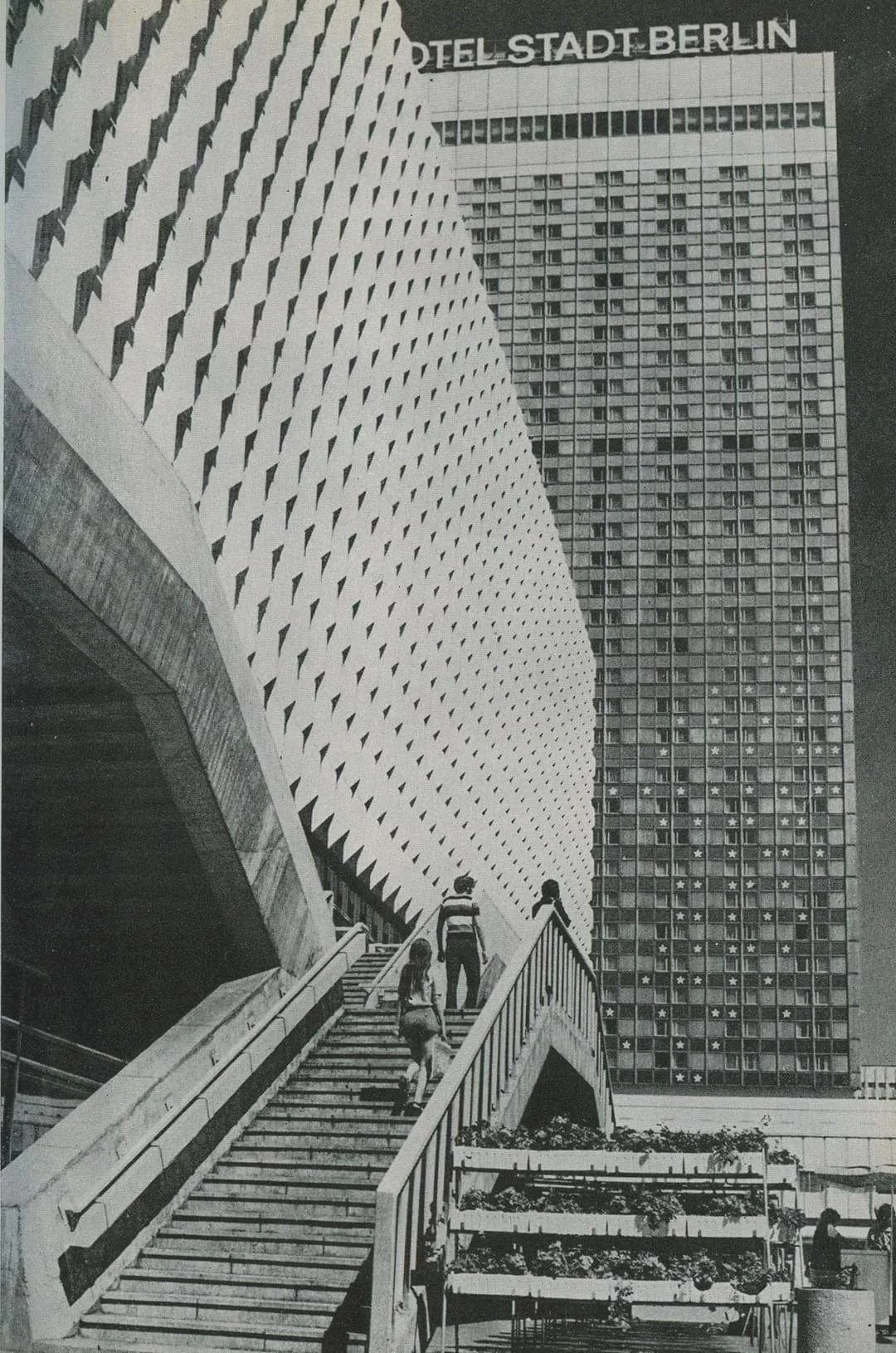
This striking photograph captures the architectural intersection of the Hotel Stadt Berlin and the Centrum Department Store at Alexanderplatz, East Berlin, during the 1970s. These structures were the crown jewels of Socialist Modernism in the German Democratic Republic (GDR).
The Hotel Stadt Berlin, opened in 1970, stood as a 125-meter-tall symbol of GDR progress, designed to accommodate the influx of visitors to the capital. Adjacent to it, the Centrum Department Store, recognizable by its iconic honeycomb-patterned aluminum facade, represented the state's attempt to provide a modern, consumer-oriented socialist shopping experience.
Alexanderplatz was redesigned in the 1960s and 70s as a socialist showcase, replacing the pre-war urban fabric with vast pedestrian plazas and monumental architecture intended to reflect the efficiency and strength of the East German state. The photograph highlights the dramatic geometric contrast between the towering hotel and the textured exterior of the department store, a hallmark of the era's brutalist-influenced aesthetic.
Historically, these buildings served as focal points of daily life in East Berlin, hosting both locals and international travelers. The Centrum store was part of the state-owned Handelsorganisation (HO) network, designed to showcase the availability of goods in a planned economy.
Following the German reunification in 1990, the site underwent significant transformations; the Centrum department store was rebranded as Galeria Kaufhof, and the hotel was eventually rebranded as Park Inn by Radisson. This image serves as a poignant reminder of the architectural ambition of the Cold War era and the ideological messaging embedded in East German urban planning.