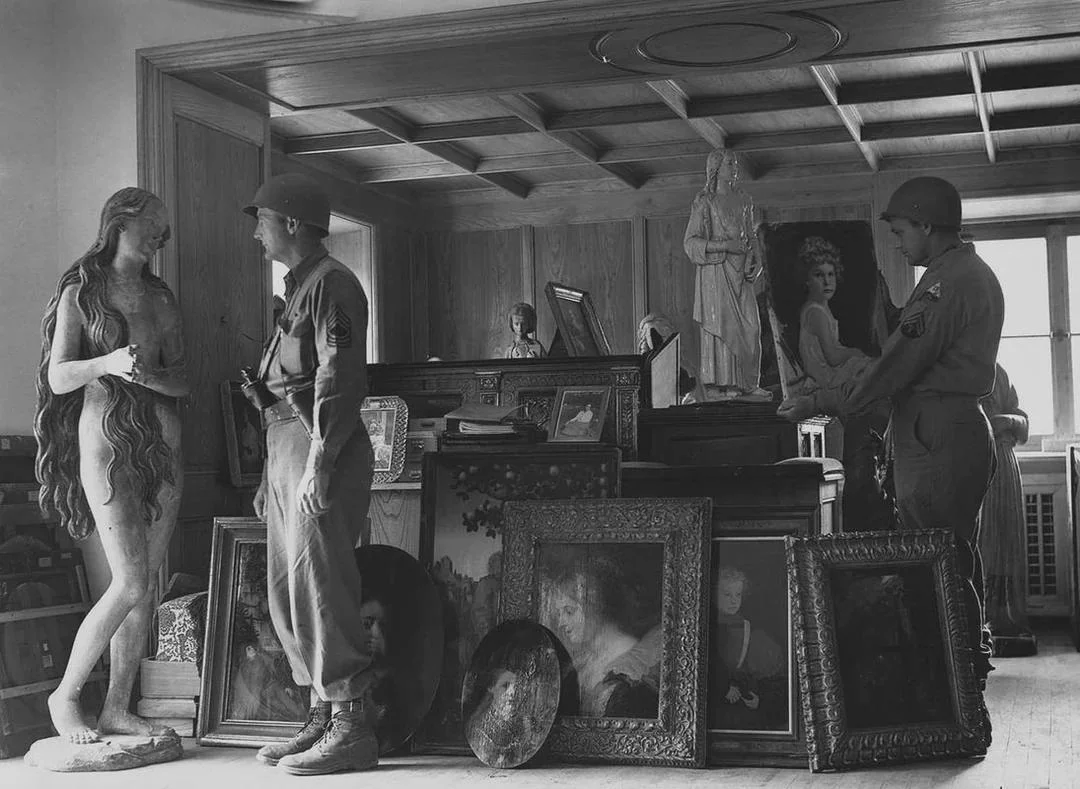
This historic photograph captures two U.S. soldiers inspecting a portion of the vast collection of looted art hidden by Hermann Göring, the Reichsmarschall of Nazi Germany, in May 1945. Following the collapse of the Third Reich, Allied forces discovered massive caches of plundered European cultural treasures stored in mountain retreats and salt mines near Schönau am Königsee, Bavaria.
Göring, a notorious art thief, had amassed thousands of priceless works from across occupied Europe to furnish his estate, Carinhall, and to serve as a personal investment portfolio. The soldiers depicted are members of the U.S.
Seventh Army, who were instrumental in the efforts of the Monuments, Fine Arts, and Archives program—the legendary 'Monuments Men.' These units were tasked with documenting, protecting, and recovering cultural property stolen by the Nazis. The image highlights the scale of the systematic looting orchestrated by the Nazi hierarchy, which sought to strip conquered nations of their national heritage.
The recovery of these works was a critical objective for the Allied military, ensuring that masterpieces by artists ranging from the Renaissance to the modern era could eventually be returned to their rightful owners or nations. This discovery served as vital evidence during the Nuremberg Trials, where Göring was prosecuted for his role in the systematic spoliation of art.
The photograph stands as a testament to the preservation of human culture amidst the devastation of World War II and underscores the enduring legacy of the Monuments Men in safeguarding global history from total destruction.
Bu tarihi fotoğraf, Mayıs 1945'te Nazi Almanyası'nın Reichsmarschall'ı Hermann Göring tarafından saklanan ve yağmalanan devasa sanat koleksiyonunun bir kısmını inceleyen iki ABD askerini göstermektedir. Üçüncü Reich'ın çöküşünün ardından Müttefik kuvvetler, Bavyera'nın Schönau am Königsee yakınlarındaki dağ sığınaklarında ve tuz madenlerinde saklanan, yağmalanmış Avrupa kültürel hazinelerinden oluşan devasa depolar keşfetti.
Kötü şöhretli bir sanat hırsızı olan Göring, malikanesi Carinhall'ı döşemek ve kişisel yatırım portföyü olarak kullanmak üzere işgal altındaki Avrupa'nın dört bir yanından binlerce paha biçilmez eseri biriktirmişti. Fotoğraftaki askerler, efsanevi 'Anıtlar Adamları' (Monuments Men) olarak bilinen ve Sanat Eserleri, Arşivler ve Tarihi Anıtlar programının bir parçası olan ABD Yedinci Ordusu mensuplarıdır.
Bu birimler, Naziler tarafından çalınan kültürel varlıkları belgelemek, korumak ve kurtarmakla görevliydi. Görsel, Nazi hiyerarşisi tarafından organize edilen ve fethedilen ulusların mirasını ellerinden almayı amaçlayan sistematik yağmanın boyutlarını gözler önüne sermektedir.
Bu eserlerin kurtarılması, Rönesans'tan modern döneme kadar uzanan başyapıtların sahiplerine iade edilebilmesi için Müttefik askeri yönetimi açısından kritik bir hedefti. Bu keşif, Göring'in sanat eserlerinin sistematik yağmalanmasındaki rolü nedeniyle yargılandığı Nürnberg Mahkemeleri sırasında hayati bir delil teşkil etmiştir.
Fotoğraf, İkinci Dünya Savaşı'nın yıkımı ortasında insanlık kültürünün korunmasının bir kanıtı olarak durmakta ve Anıtlar Adamları'nın küresel tarihi yok olmaktan kurtarma konusundaki kalıcı mirasının altını çizmektedir.