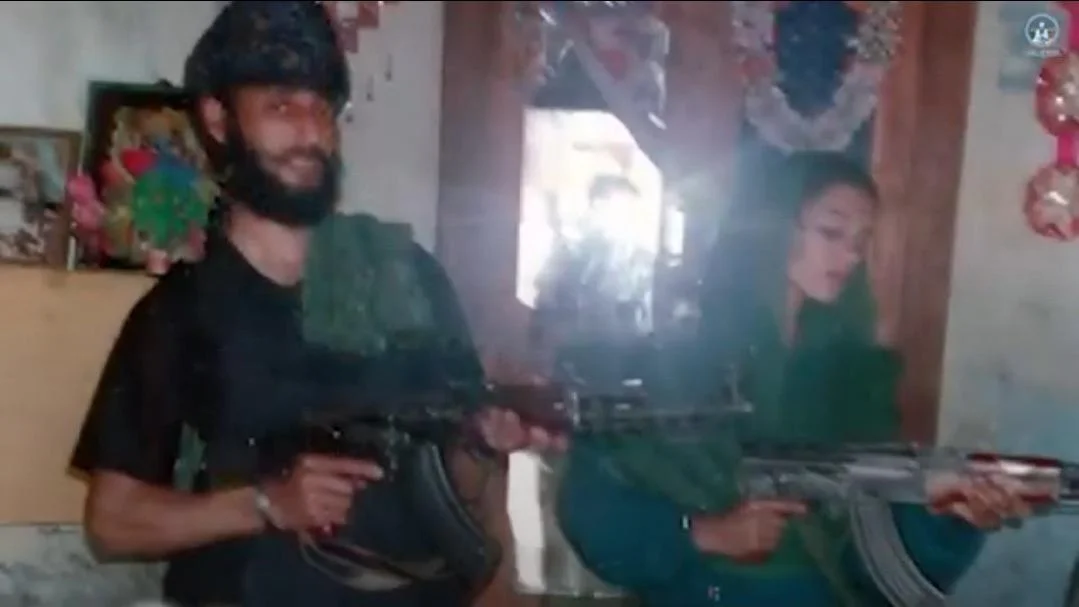
This striking photograph captures a Sikh couple posing with assault rifles, a visual testament to the volatile climate of the Punjab insurgency during the 1980s. This period, often referred to as the 'Dark Decade' in Punjab, was marked by a violent separatist movement seeking the creation of Khalistan, an independent Sikh state.
The conflict intensified significantly following Operation Blue Star in June 1984, a military operation ordered by Prime Minister Indira Gandhi to remove militant leader Jarnail Singh Bhindranwale from the Golden Temple in Amritsar. The subsequent fallout led to widespread communal violence, the assassination of Indira Gandhi in October 1984, and the 1984 anti-Sikh riots, which claimed thousands of lives across India.
The image reflects the radicalization of segments of the Sikh population during this era, highlighting the prevalence of armed militancy in rural and urban Punjab. The presence of weaponry in a domestic setting underscores how deeply the insurgency permeated everyday life, transforming local communities into theaters of conflict.
Historians note that the insurgency was characterized by a complex intersection of political grievances, religious identity, and state-sponsored counter-insurgency tactics. By the early 1990s, the intensity of the insurgency began to wane due to increased security measures by the Punjab Police under K.P.S.
Gill and a general exhaustion within the populace. This photograph serves as a haunting primary document of a period that fundamentally reshaped India’s internal security landscape and the sociopolitical identity of the Sikh community for generations to come.