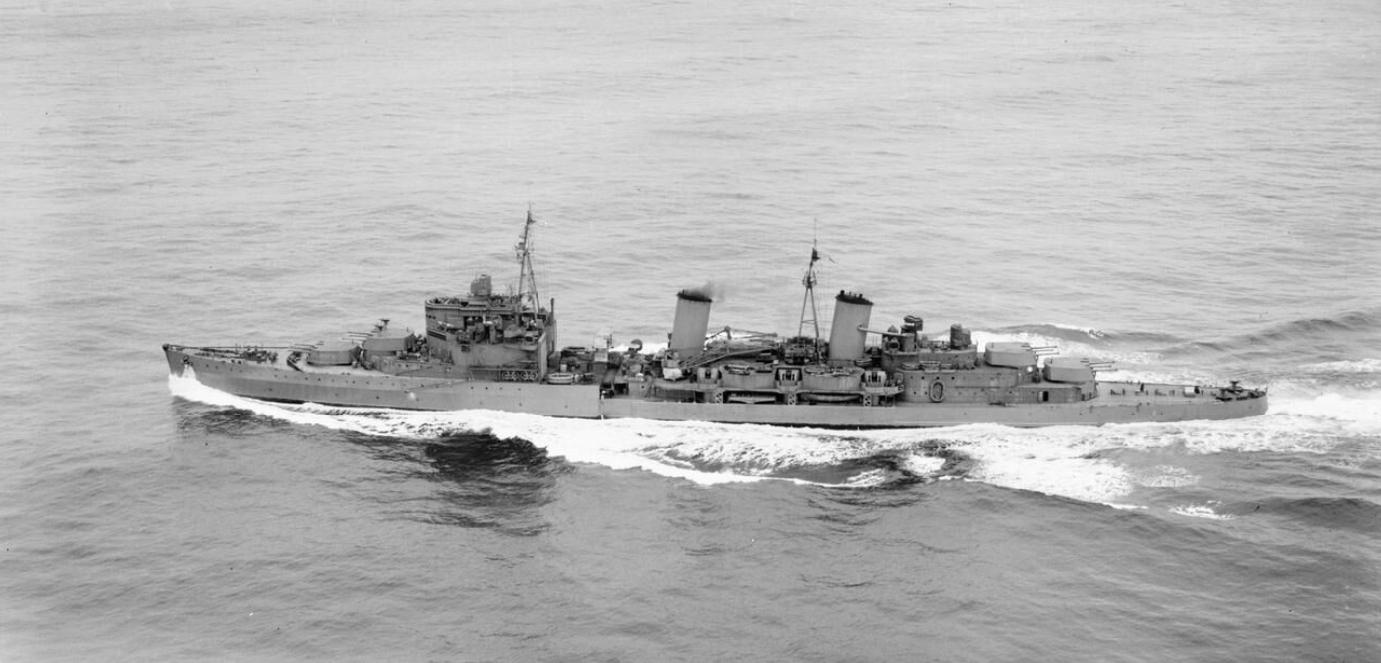
This photograph depicts the Town-class light cruiser HMS Edinburgh (16) at sea during the height of World War II. Launched in 1938, the vessel became a pivotal player in the Arctic Convoys, tasked with delivering essential supplies to the Soviet Union.
Its final mission in April 1942, Convoy QP 11, carried a secret, high-stakes cargo: 4.5 tons of gold bullion, payment from the Soviet government to the United Kingdom for war materials. On 30 April 1942, the ship was struck by two torpedoes from the German submarine U-456.
Despite attempts to tow the damaged cruiser back to Murmansk, the structural integrity of the hull was compromised. On 2 May 1942, after further attacks by German destroyers, the decision was made to scuttle the vessel to prevent its capture.
The ship sank in the freezing depths of the Barents Sea, taking its precious cargo to a depth of 800 feet. The wreck remained undisturbed for nearly four decades until the 'salvage of the century' in 1981.
Led by Keith Jessop and his company, Sub Sea Services, the operation successfully recovered 431 of the 465 gold bars, a feat of engineering that remains one of the most famous deep-sea salvage operations in maritime history. This image captures the ship in its prime, representing the immense logistical challenges and dangers faced by Allied forces during the Arctic supply runs, where extreme weather and constant U-boat threats defined the conflict.