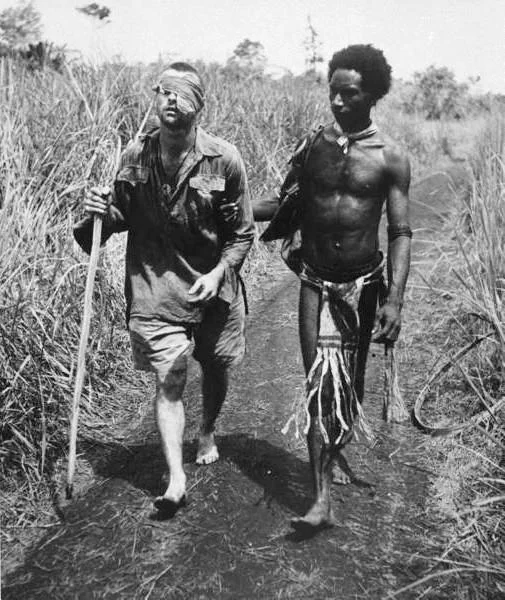
This iconic photograph, captured on Christmas Day, December 25, 1942, depicts a wounded Australian soldier being guided through the tall kunai grass near Buna, New Guinea, by a Papuan orderly named Raphael Oimbari. The soldier, Private George 'Dick' Whittington of the 2/10th Battalion, had been blinded by shrapnel during the brutal fighting against Japanese forces.
Oimbari, a member of the Papuan Infantry Battalion, was one of thousands of indigenous locals who served as stretcher-bearers and medical orderlies, earning the nickname 'Fuzzy Wuzzy Angels' from the Australian troops for their selfless bravery and dedication to saving Allied lives under extreme combat conditions. The Battle of Buna-Gona was characterized by horrific jungle warfare, disease, and high casualty rates.
This image became a potent symbol of the bond between Australian soldiers and the local Papuan people, highlighting the essential role indigenous support played in the Pacific Theater. According to the Australian War Memorial, the term 'Fuzzy Wuzzy Angels' was immortalized in a poem by Sapper Bert Beros, which celebrated the compassion shown by these men who carried wounded soldiers over treacherous terrain, often through mud and tropical rain.
This photograph serves as a poignant reminder of the human cost of the Pacific War and the often-overlooked contributions of indigenous personnel who risked their lives to support the Allied effort. It remains one of the most recognizable images from the New Guinea campaign, illustrating both the physical devastation of the conflict and the profound humanity that emerged amidst the violence of World War II.